
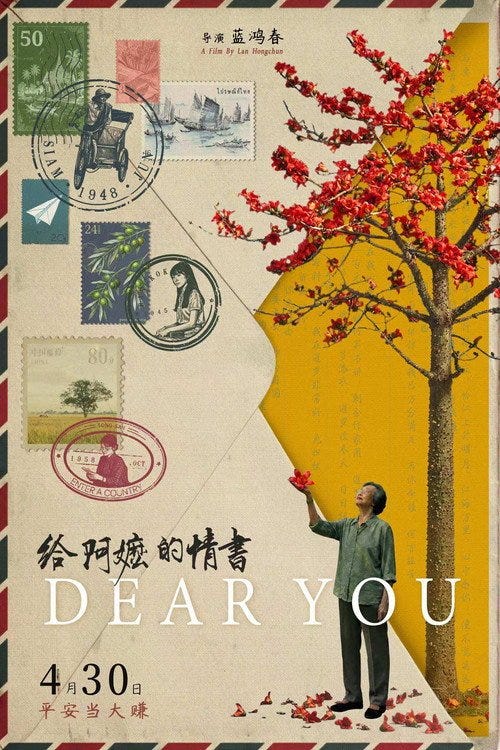
An indie film filmed completely in Chaoshan (潮汕) dialect has taken Asia by storm in the last few months. “Dear You” or Love Letter to Grandma (its Chinese title) has drawn massive audiences watching the film who do not even know the dialect. This film, which cost 14 million yuan, has now grossed 1.8 billion yuan in ticket sales as of late June 2026. One reason the film draws so many, particularly in the context of unprecedented technological changes in our world, could be its very human message – human trust matters.
The story traced the discovery of debt-ridden XiaoWei, as he traveled from China to Thailand in search of his “wealthy grandfather”, Zheng Musheng. His main clues were in the form of Qiaopi that his grandmother Ye Shurou had kept in her attic all these years. Qiaopi are letters with remittances that overseas Chinese had sent back from South East Asian countries during the great Chinese diaspora of the early 20th century.
XiaoWei’s search soon came to nought when he discovered that his grandfather was neither rich nor alive – he had passed on in 1960. The story revolved around this mystery – why did the Qiaopi keep coming to his grandma for many years after 1960?
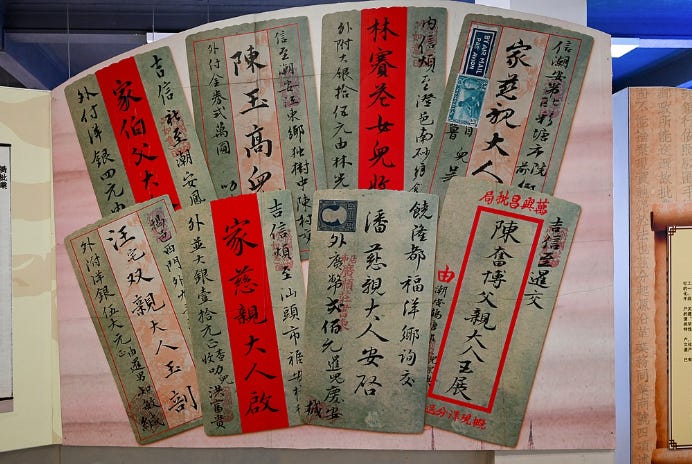
During that time, the Chinese emigrants were illiterate and had no access to banking; the Qiaopi system emerged organically. This was a very complex system with many intermediaries. Chinese laborers would go to a letter writer who not only helped them compose their letters, but also acted as a foreign exchange agency. These letters and monies became Qiaopi, which made their long arduous journey by boat and were transferred through many more hands from port to tiny Chinese villages, before being delivered to the recipient. A reply then travels back in reverse, and the letter writer now acts as the post office where emigrants receive and have their letters read to them.
According to the movie, more than 30 million Qiaopi arrived in China between 1864 and 1980, with remittances worth more than US$ 10 billion in today’s terms.
The one thought that struck me about the entire Qiaopi system was this: how could it have worked?
So many factors seem insurmountable –
An illiterate Chinese laborer could not know for certain what was written in the letters, or whether they were sent, or if the monies were accurately accounted for.
The Qiaopi agency had to entrust these letters with little recourse to many intermediaries over long distances, spread over many places and lengthy periods of time.
The intermediaries knew that Qiaopi carried monies and had many opportunities of pilfering or absconding with these.
There was no legal oversight by any governments of this Qiaopi system.
What allowed this Qiaopi system to work?
Trust.
Without trust, the entire Qiaopi system collapses.
This Qiaopi system was at its very foundation, based on trust in the goodness and ethical behavior of the innumerable participants. People who held each other in sympathy – who understood the pain and hardships, hopes and longing each letter and remittance represented.
Could it be that so many were drawn to this film because, deep down, we mourn the loss of this human sympathy and grieve the erosion of trust in our hypermodern world?
Our technologies make us feel so powerful and seem to be the panacea for any challenge – except that these technologies have become the very conduits for eroding human trust. Fake news, fake accounts, surveillance and scams. With the AI of everything, more and more content is not even human generated anymore. In defense, we carry with us a hermeneutic of suspicion – a distrust of everything and everyone we encounter.
Teachers suspect students of using AI for their assignments.
Students/parents suspect teachers of not attending personally to students’ work.
Bosses suspect subordinates of outsourcing their work to AI.
Subordinates suspect bosses of supplanting their jobs with AI.
The governed suspect their leaders of curtailing freedoms with AI surveillance.
And all of us suspect each piece of information we now come across – is this even real?
Sheer exhaustion.
And worse, much of the adoption of AI is driven by a narrative of fear – fear of losing to competition, fear of being made redundant…yet the real fear may actually be this – can we humans have a collective future without trust?
So instead of asking ourselves how we can leverage AI to increase our productivity or make us look or sound smarter, maybe we should be asking ourselves – does this build or erode trust? Because where there is no trust, there is no future.
The Qiaopi is a testament to the life-giving power of trust. It helped save lives, build homes, support villages and country. We are at a crossroads today. Whether we choose to build or destroy trust should be the more compelling question we ask every time we are afforded the chance to use AI.
Disclosure: this article was written entirely by a human, and Claude was used for grammar check.